A History
A large group of professional and amateur musicians held various positions in the musical Milan of the 18th century at the orchestra of the Teatro Ducale, at churches and convents, which maintained their own chapel, confraternities, academies, patrician houses (Casa Clerici, Marquis of Caravaggio, Count Firmian) and at public concerts in the Sforza Castle (open-air concerts, for the nobility and the citizens, to enjoy the fresh evening air), in an authentic flourishing of instrumental music.
The dominant figure was Giovanni Battista Sammartini, alongside his older brother, Giuseppe Baldassarre Sammartini. A proper instrumental school was formed around the figure of Sammartini with Giuseppe Palladino, Gaetano Piazza, Ferdinando Galimberti and other composers.
Similarly, other Lombard musicians found fortune abroad, in a historical period that was very troubled for the Lombardy region (Spanish domination, French and Savoy occupation, Gallo-Sard occupation, return of the Austrian monarchy) that nevertheless opened the door to European contacts.
A Lombardy, then as now, of international scope.
Giuseppe Sammartini was a composer and one of the best oboists of his time. Born in Milan and admired by composers such as Quantz, he moved to London where he worked for the Prince of Wales until his death.
Pietro Locatelli, a virtuoso violinist and successful composer born in Bergamo, worked in Rome and then performed for years in various cities in Germany. He settled in Amsterdam, working until his death and enjoying great wealth and fame.
Few facts about Gaetano Piazza’s life have survived to the present day. Organist and composer, he worked at several churches in Milan as maestro di cappella. His theatrical music was performed at the Teatro Ducale in Milan and the Teatro Omodeo in Pavia.
Giovanni Battista Serini, from Cremona, born into a family of musicians, studied in Venice with Galuppi. He worked first at the court of Bückenburg, then in Prague and Bonn.
Giovanni Battista Sammartini, organist, composer, teacher and maestro di cappella born in Milan, became as famous for his sacred compositions as for his instrumental music. He founded the first symphonic school in Europe.
Michele Favaro. Flute / Oboe
Michele Favaro, oboist and flutist, studied at the ‘B. Marcello’ Conservatory in Venice where he brilliantly graduated in 1990. From his earliest years, he dedicated himself to chamber music while not neglecting important collaborations with entities such as the Teatro la Fenice. His extensive experience in the field of Venetian music led him to learn the traversiere flute and the performance practices of early music.
In 2000 he also began studying the oboe in Maestro Paolo Grazzi’s class at the ‘E. F. Dall’Abaco’ Conservatory in Verona. He has participated in courses held by Italian and foreign instrumentalists such as: M. Larrieu, R. Greiss, M. Mercelli, A. Bernardini and others. In 1996 he is one of the founders of the Accademia di San Rocco, a historical group in the performance of ancient music in Venice, a prestigious project with its institutional seat at the Scuola Grande di San Rocco, from which it took its name and which, due to the interest it aroused, got the patronage of Unesco. With Accademia di San Rocco it has performed in England, France, Germany, Austria, Slovenia, Croatia and the United States.
In 1999, he participated in the creation of the Venice Baroque Orchestra, the first large ancient music orchestra in Venice, of which he is the permanent oboist and flutist. With this formation he has performed in Italy and in the most most important halls in Europe, America and Asia such as Concertgebow (Amsterdam), Carnegie Hall (New York), Walt Disney Concert Hall (Los Angeles), everywhere performing mainly, but not exclusively, the concertos solos by Antonio Vivaldi and other Venetian composers. He collaborates with various Italian and foreign orchestras.
Participations and concerts have been broadcast by Rai Italian Radio Television, TV Koper, Rai Sat, and various other European broadcasters. He records for Arts, Sony Classical, Deutsche Grammophon and other major record companies.
Marlise Goidanich. Cello
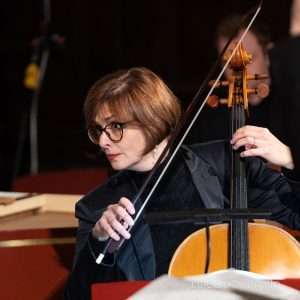
Brazilian, Marlise Goidanich graduated in Artistic Education – Music at the Federal University of Rio Grande do Sul and in the Advanced Course in Instrument – Cello at the School of Music and Fine Arts of Paraná, with Professor Maria Alice Brandão. In Italy, she graduated in baroque cello at the International Academy of Music in Milan under the guidance of Professor Gaetano Nasillo, and obtained a second level diploma in baroque cello at the Novara Conservatory. She has received several scholarships: Marco Fodella Foundation (2003), Baroque Orchestra of the International Academy of Music (2005 and 2007), Baroque and Classical Orchestral Training Course of the Academy Montis Regalis in Mondovì (2005). Since 2003 she has been working with Baroque orchestra and participating in chamber music seminars in Italy with Trevor Pinnock, Lorenzo Ghielmi, Enrico Onofri, Stefano Montanari, Paolo and Alberto Grazzi, Mara Galassi, among others. Marlise collaborates with numerous early music ensembles, including “Ensemble Turicum” and Orchester Collegium Cantorum (Zurich), “Ensemble Alea Musica” (Basel), Ensemble “La Treccha” (Holland), Chamber Orchestra “Milano Classica”, “Accademia Litta”, Ensemble “Silete Venti”, “Il Bell’Accordo Ensemble”, “Ensemble Estro Cromatico”, “Ensemble Pian&Forte”, “Cappella Mauriziana” and “Ensemble Dolcimelo” (Milan), Ensemble La Concordanza (Monza), Ensemble La Terza Prattica (Novara), Ensemble “Il Falcone” and “Concento Ecclesiastico” (Genoa), Baroque Orchestra of Pietra Ligure, “Concerto de’ Cavalieri” (Rome).
In the field of modern music, she has accompanied among others Renato Borghetti, Avion Travel and Max de Aloe Quartet. She has recorded for the record labels ‘Amadeus’, ‘Stradivarius’, ‘Brilliant Classics’, ‘Deutsche Harmonia Mundi’, ‘Abeat Records’ and ‘Paraty’.
Emma Bolamperti. Harpsichord
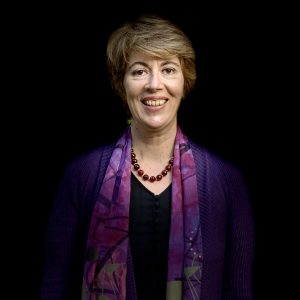
She graduated in piano under the guidance of Mario delli Ponti. She then attended post-diploma courses in piano with Sergio Marengoni at the Conservatory of Milan, graduating with top marks. In 2004, she graduated in harpsichord at the Conservatory of Piacenza. In 2007, she obtained his second-level academic diploma in “Master of harpsichord” at the Conservatory of Milan, with top marks and honours, with a thesis on the cantatas of the Neapolitan musician Giuseppe Antonio Avitrano. From 1998 to 2004 she deepened her study of chamber music with Pier Narciso Masi, obtaining multi-year diplomas at the Accademia Musicale in Voghera, the Accademia Musicale in Florence and the International Piano Academy ‘Incontri col Maestro’ in Imola.
Since 2000, Emma has mainly dedicated herself to the study of early music. She participated in master classes with Goerge Kiss, Bernard Brauchli, Gustav Leonhardt, Pierre Hantai, Edoardo Bellotti, Emilia Fadini and Christophe Rousset and studied at the International Academy of Music in Milan. In 2006 she was chosen by Arthur Schoonderwoerd to take part in the first “Mozart Academie”, an orchestra with historical instruments, which brought together young musicians from all over Europe and with which she
performed Mozart’s “Così fan tutte” at the theatre in Besançon, France.
She collaborates as a continuist with various orchestras and instrumental ensembles, combining her concert activity with her teaching activity as a piano teacher in music-oriented middle schools and music high schools.